The Professorship of Intelligent Space and Energy Systems investigates how sequential decision-making algorithms can enable AI systems to act autonomously and reliably in safety-critical and data-scarce environments. We study how such systems can make robust decisions over time, adapt to changing conditions, perform long-horizon tasks, and remain reliable when deployed beyond controlled laboratory settings. This includes methods from reinforcement learning, planning, and validation before real-world operation.
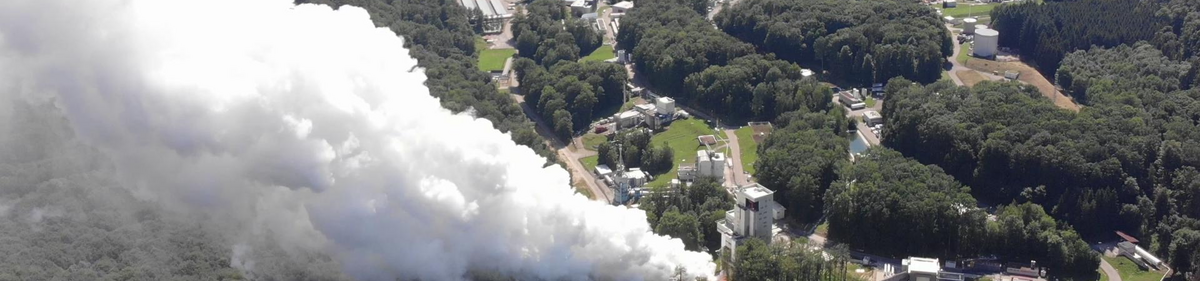
The primary application domain is closely connected to research questions arising at the DLR Institute of Space Propulsion. A key motivation is that AI-based decision-making methods can support test facilities in making tests safer, more efficient, better documented, and more resilient to unexpected events. At the same time, this application domain provides a real-world validation context for the professorship’s research: it enables sequential decision-making methods to be evaluated under real technical conditions, rather than only being demonstrated in laboratory settings or simulations. In particular, this includes optimized space propulsion control and test operations, autonomous robotic inspection, and selected applications in hydrogen technologies.
Beyond the activities connected to the DLR Institute of Space Propulsion, we also conduct research on the application of sequential decision-making algorithms to autonomous spacecraft. The professorship’s work on reinforcement learning and planning also connects to broader questions in AI safety, particularly the reliable behavior of autonomous AI systems that make decisions over time under uncertainty.
Students interested in sequential decision-making, reinforcement learning, planning, and their applications are very welcome to join our courses or write their Bachelor’s or Master’s thesis with our group.