Measurement Boxes for Environmental Observation
Motivation
For many applications in the field of environmental monitoring, researchers must measure and log environmental parameters like air- and soil temperature, humidity and soil moisture. While there are several commercial data loggers available that offer great accuracy, costs can quickly add up if multiple units are required for a project. Additionally, if special sensors are needed that aren't supported by these products, scientists may find themselves out of luck.
On the other hand, microcontroller development boards such as Arduinos and ESP32s have become very cheap and widely available over the last couple of years, as well as sensors that rival the accuracy of commercial solutions, or in some cases actually use the same sensor at their core. Thus, developing their own dataloggers is an option worth looking into for researchers.
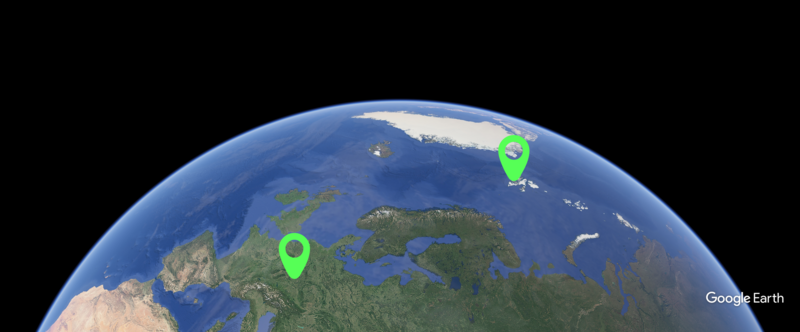
Furthermore, other institutions, such as the University Centre in Svalbard (UNIS), require similar devices, for permafrost studies in their case.
Combining all these factors it made sense for us to develop our own custom Solution in cooperation with UNIS.
Our Measurement Boxes
Different versions of environmental measurement boxes and dataloggers for both educational purposes during lectures and for actual deployment were developed at ESSEO.
Version 1 - Proof of Concept
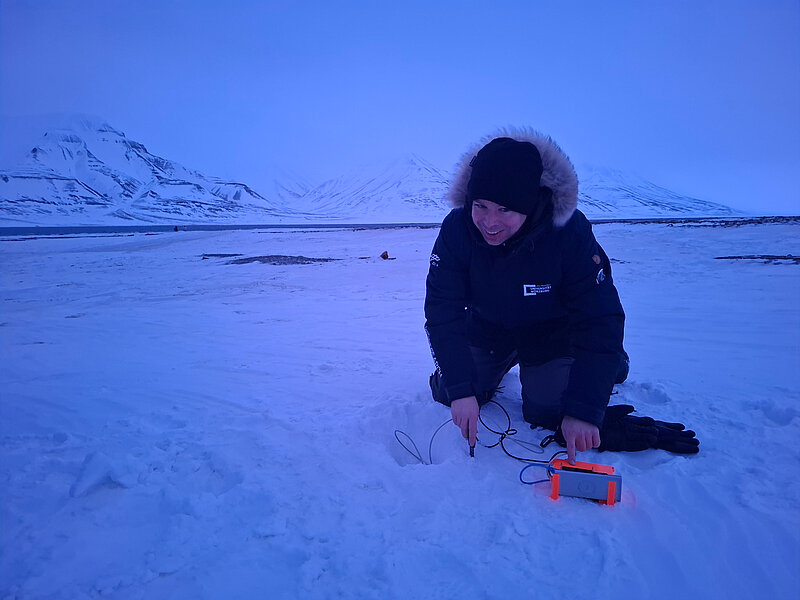
The goal when creating this first version was to create a prototype to demonstrate that building a datalogger capable of withstanding the harsh conditions of the Arctic, using off-the-shelf components, is viable. This was done using an Arduino Uno in a 3D-printed case, a USB Power Bank as a power supply and cheap sensors to measure soil temperature and moisture.
This prototype was tested by Professor Schmidt on Svalbard in the arctic, yielding promising results. Thus, it was decided to further develop measurement boxes for environmental parameters.
Version 2 - Seminar Projects
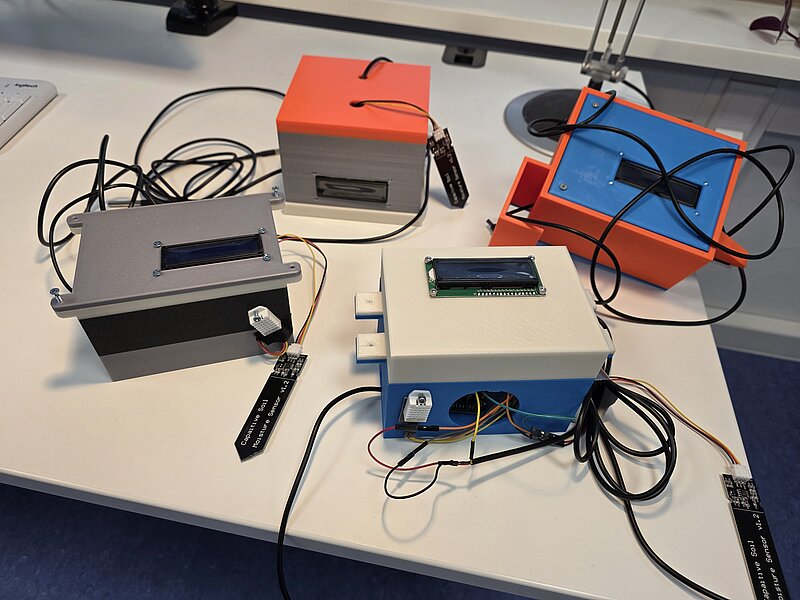
During the seminar "Umweltbeobachtung" / "Environmental Observation", student teams developed various simpler measurement boxes for educational and demonstrational purposes. The task was to design, build and program an ESP32-based datalogger, with a small 2x16 LCD to show current measurement values, an SD-Card to store the data and a 3D printed case to house everything.
Additionally, the WiFi capabilities of the ESP32 were used to read the data on a computer using a python script while serial communication could be used to configure measurement parameters. To measure environmental conditions, the following sensors were employed:
- DS18B20 (soil temperature)
- Dfrobot soil moisture sensor (soil moisture)
- DHT22 (air temperature and humidity)
Due to the cheap sensors used, the price of a single unit is only about 30€.
Version 3 - Multichannel Lab Datalogger
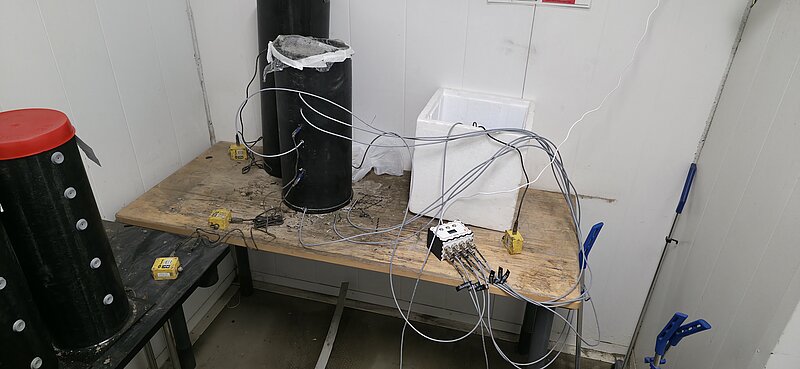
The latest version is optimized for use in a laboratory setting, particularly to measure the thawing speed of frozen earth cores. This required a higher accuracy and reliability than the previous, simpler versions.
The problems in this regard were mostly to do with usability, sensor accuracy / flexibility, and clock synchronization.
Sensor accuracy was addressed by using the much more accurate PT1000 thermistor in combination with a MAX31865.
To enable clock synchronization, version 3 is based on the ESP32-S2 and utilizes its network capabilities in combination with NTP to set the internal time.
This allows for synchronized measurements across multiple data loggers
Sensors and measurements are defined in a configuration file to avoid constantly needing to reflash the chip for small changes.
These settings can also be changed in a web app used for creating and monitoring measurements hosted on the ESP.
We also started to implement custom features, such as alarms that notify the user via Telegram if sensor values exceed a threshold.
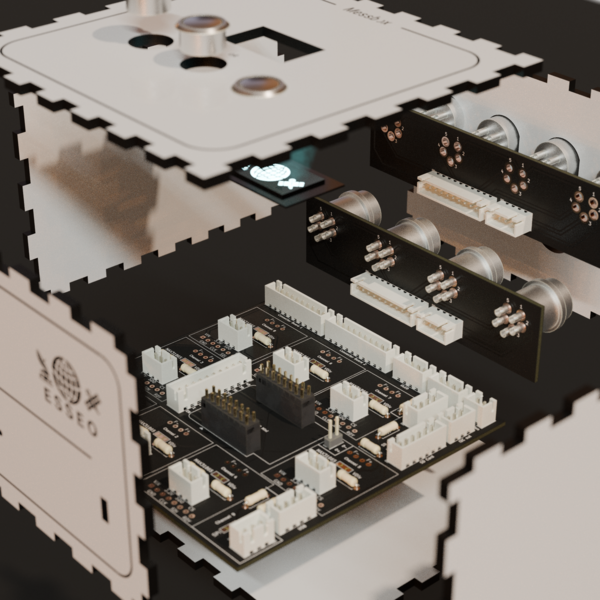
Lastly, we also designed a custom PCB and a laser-cut case.
Even with all these changes, the base cost for one unit is still only ~30€, but each added PT1000/MAX31865 pair adds another ~30€
Current Research Topics
- Making the current version weatherproof
- Adding support for:
- more sensor types
- a battery pack
- an integrated real-time clock and/or GPS