

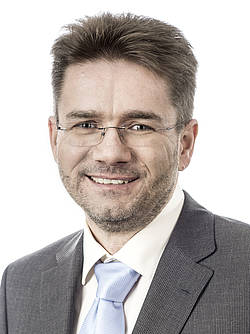
Prof. Dr. Martin Hennecke
Prof. Dr. Martin Hennecke
Inhaber der Professur
Professur für Didaktik der Informatik
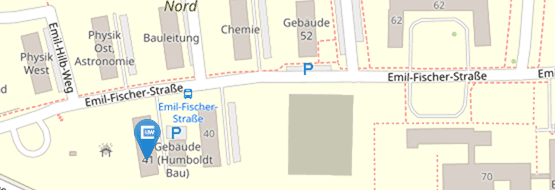
Emil-Fischer-Str. 30
97074
Würzburg
Gebäude:
30 (Mathematik West)
Raum:
01.011
Telefon:
+49 931 31-83377
Fax:
+49 931 31-85089
E-Mail:
martin.hennecke@uni-wuerzburg.de
2026[ to top ]
-
Professional Development for Bavarian Computer Science Teachers: Evaluation and Effects on Attitudes Towards AI. . In Informatics in Schools. Fostering Problem-Solving, Creativity, and Critical Thinking Through Computer Science Education, Bd. 15958 von Lecture Notes in Computer Science, J. Staub, A. Singla (Hrsg.), S. 68–79. Springer, Cham, 2026.
-
New Standards for Lower Secondary Education in Informatics in Germany. In Informatics in Schools. Fostering Problem-Solving, Creativity, and Critical Thinking Through Computer Science Education, von Lecture Notes in Computer Science, J. Staub, A. Singla (Hrsg.), S. 3–14. Springer, Cham, 2026.
2025[ to top ]
-
Experiencing algorithms in virtual reality. . Universität Würzburg, Würzburg, 2025.
-
Weiterbildung von Informatiklehrkräften: Maßnahmen, Best-Practices und Community Building. . In Grenzen überwinden - voneinander lernen, 21. GI-Fachtagung Informatik und Schule, von Lecture Notes in Informatics, M. Grillenberger, A. Grillenberger (Hrsg.), S. 333–334. Gesellschaft für Informatik e.V., Bonn, 2025.
-
KI verstehen: Der Experimentiersatz Künstliche Intelligenz. . In Grenzen überwinden - voneinander lernen, 21. GI-Fachtagung Informatik und Schule, von Lecture Notes in Informatics, M. Grillenberger, A. Grillenberger (Hrsg.), S. 317–318. Gesellschaft für Informatik e.V., Bonn, 2025.
-
MAL-E: Understanding Text-to-Image Generation. . In Proceedings of the Second Workshop on Artificial Intelligence for Artificial Intelligence Education (AI4AI Learning 2024), S. 23–32. University of Bamberg Press, Bamberg, 2025.
-
Bildungsstandards der GI: Impulse oder Pflichtübung? Eine Gegenüberstellung von Bildungsstandards mit ausgewählten Lehrplänen. . In Grenzen überwinden - voneinander lernen, 21. GI-Fachtagung Informatik und Schule, von Lecture Notes in Informatics, M. Grillenberger, A. Grillenberger (Hrsg.), S. 37–46. Gesellschaft für Informatik e.V., Bonn, 2025.
-
Bildungsstandards Informatik für die Sekundarstufe I: Empfehlungen der Gesellschaft für Informatik e.V. . G. für Informatik e.V. (Hrsg.). Gesellschaft für Informatik e.V., 2025.
-
Algorithmen erleben in Virtual Reality. . In Digitale Medien in Lehr-Lern-Konzepten der Lehrpersonenbildung in interdisziplinärer Perspektive: Ergebnisse des Forschungsprojekts Connected Teacher Education, A. Füting-Lippert, M. Eisenmann, S. Grafe, H.-S. Siller, T. Trefzger (Hrsg.), S. 173–185. Springer VS, Wiesbaden, 2025.
2024[ to top ]
-
Den k-Means-Algorithmus verstehen: Mit Stift & Papier und BlueJ. . In Informatische Bildung in Schulen (IBiS), 2(1), S. 44–55. 2024.
-
ClusterLabor: Ein Werkzeug zur interaktiven Visualisierung und Analyse von Clusteralgorithmen. . In Informatische Bildung in Schulen, 2(2), S. 55–63. 2024.
-
Labs4Future. Kristallisationskeim für Lehren und Lernen zur Klimakrise. . In Lehrkräftebildung von morgen, N. Graulich, J. Arnold, S. Sorge, M. Kubsch (Hrsg.), S. 147–157. Waxmann, Münster, 2024.
-
Assessing Teachers’ Capabilities to Work with Models and Evaluate Results in the Context of a Complex and Authentic STEM Problem. . In Education Sciences, 14(1), S. 104. 2024.
-
Förderung von KI-Kompetenzen von Informatiklehrkräften in Bayern. . In Proceedings of DELFI Workshops 2024, N. Kiesler, S. Schulz (Hrsg.). Gesellschaft für Informatik e.V., 2024.
2023[ to top ]
-
Teaching Reflective Use of Technology: A Piloted Workbook Based on Evacuations. . In Proceedings of the 20th International Conference on Cognition and Exploratory Learning in Digital Age (CELDA2023), D. G. Sampson, D. Ifenthaler, P. Isaías (Hrsg.), S. 278–288. 2023.
-
NetVisard: Ein Programm zur Simulation Neuronaler Netze. . In Informatikunterricht zwischen Aktualität und Zeitlosigkeit, von Lecture Notes in Informatics, L. Hellmig, M. Hennecke (Hrsg.), S. 405–406. Gesellschaft für Informatik e.V., Bonn, 2023.
-
DigiLLabs@JMU an der Professional School of Education der Julius-Maximilians-Universität Würzburg. . In Lehr-Lern-Labore und Digitalisierung, M. Meier, M. Hammann, G. Greefrath, K. Ziepprecht, R. Wodzinski (Hrsg.), S. 155–159. Springer VS, Wiesbaden, Germany, 2023.
-
Mit Robotern muss gerechnet werden... Mathematikfreundlicher Robotikunterricht in der Sekundarstufe I. . In mathematik lehren, (237). 2023.
-
Analyzing Reporting on Ransomware Incidents: A Case Study. . In Social Sciences, 12(5), S. 265. 2023.
-
Das gläserne Ökosystem: Vorstellung einer Lernumgebung für ein fächerübergreifendes MINT-Projekt. . In Informatikunterricht zwischen Aktualität und Zeitlosigkeit, von Lecture Notes in Informatics, L. Hellmig, M. Hennecke (Hrsg.), S. 339–348. Gesellschaft für Informatik e.V., Bonn, 2023.
-
Informatikunterricht zwischen Aktualität und Zeitlosigkeit. . In Bd. P-336 von Lecture Notes in Informatics. Gesellschaft für Informatik e.V., Bonn, 2023.
-
Algorithmen erleben in VR. . In Informatikunterricht zwischen Aktualität und Zeitlosigkeit, von Lecture Notes in Informatics, L. Hellmig, M. Hennecke (Hrsg.), S. 415–416. Gesellschaft für Informatik e.V., Bonn, 2023.
-
Vorwort. . In Informatikunterricht zwischen Aktualität und Zeitlosigkeit, Bd. P-336 von Lecture Notes in Informatics, L. Hellmig, M. Hennecke (Hrsg.), S. 5–7. Gesellschaft für Informatik e.V., Bonn, 2023.
-
Enaktive Bestimmung der Hyperparameter beim Entscheidungsbaum- und k-nächste-Nachbarn-Algorithmus: Vorstellung von Materialien eines KI-Experimentierkastens. . In Informatik 2023, M. Klein, D. Krupka, C. Winter, V. Wohlgemuth (Hrsg.), S. 415–418. Gesellschaft für Informatik e.V, Berlin, 2023.
- [ BibTeX ]
-
Reinforcement-Learning enaktiv und inklusiv vermitteln. . In Informatikunterricht zwischen Aktualität und Zeitlosigkeit, Bd. P-336 von Lecture Notes in Informatics, L. Hellmig, M. Hennecke (Hrsg.), S. 421–422. Gesellschaft für Informatik e.V., Bonn, 2023.
2021[ to top ]
-
EvaWeb: A Web App for Simulating the Evacuation of Buildings with a Grid Automaton. . In Technology-Enhanced Learning for a Free, Safe, and Sustainable World, T. de Laet, R. Klemke, C. Alario-Hoyos, I. Hilliger, A. Ortega-Arranz (Hrsg.), S. 424–429. Springer, Cham, 2021.
-
Ein Tool zur Visualisierung von Redstone-Schaltungen in Minecraft. . In DELFI 2021, A. Kienle, A. Harre, J. M. Haake, A. Lingnau (Hrsg.), S. 387–388. Gesellschaft für Informatik e.V., Bonn, 2021.
- [ BibTeX ]
-
Learning 21st Century Skills Through Educational Robotics Competitions. . In Robotics in Education, Bd. 1316, W. Lepuschitz, M. Merdan, G. Koppensteiner, R. Balogh, D. Obdržálek (Hrsg.), S. 163–173. Springer, Cham, 2021.
2020[ to top ]
-
VeraSQL: An educational client for relational databases. . In DELFI 2020, R. Zender, D. Ifenthaler, T. Leonhardt, C. Schumacher (Hrsg.), S. 351–352. Gesellschaft für Informatik e.V., Bonn, 2020.
-
Teaching Simulation Literacy with Evacuations. . In Addressing Global Challenges and Quality Education, Bd. 12315, C. Alario-Hoyos, M. J. Rodríguez-Triana, M. Scheffel, I. Arnedillo-Sánchez, S. M. Dennerlein (Hrsg.), S. 200–214. Springer, Cham, 2020.
-
Evaluationsbericht - Ergebnisse der wissenschaftlichen Evaluation der WRO in Deutschland. . 2020.
-
Was macht eigentlich die Informatik in der Schule? . In Beiträge zum Mathematikunterricht 2020, H.-S. Siller, W. Weigel, J. F. Wörler (Hrsg.), S. 23–30. WTM-Verlag für wissenschaftliche Texte und Medien, Münster, 2020.
-
BlocklySQL – A new block-based editor for SQL. . In Proceedings of the 14th Workshop in Primary and Secondary Computing Education. ACM, New York, NY, USA, 2019.
-
Relevanz der Codequalität in einem Praktikum mit automatisch getesteten Programmierabgaben. . In Proceedings of the Fourth Workshop "Automatische Bewertung von Programmieraufgaben" (ABP 2019), Essen, Germany, 8--9. Oktober 2019. Gesellschaft für Informatik e.V., Bonn, 2019.
-
Educating Future Scientists, Engineers, Makers and Inventors. . In Proceedings of the 19th Koli Calling International Conference on Computing Education Research, P. Ihantola, N. Falkner (Hrsg.), S. 1–2. ACM, New York, NY, USA, 2019.
-
Erfahrungsbericht zur Qualifizierungsmaßnahme Informatik als Erweiterungsfach (Lehramt Realschule) in Bayern. . In Informatik für alle. 18. GI-Fachtagung Informatik und Schule. 16.-18. September 2019, von Lecture Notes in Informatics, A. Pasternak (Hrsg.), S. 161–170. Gesellschaft für Informatik e.V., Bonn, 2019.
-
LEGO BOOST: Spielzeug mit Potenzial für den Informatikunterricht. . In LOG IN, 39(191/192), S. 106–113. 2019.
- [ BibTeX ]
-
Evaluation of a Robotics Course with the Humanoid Robot NAO in CS Teacher Education. . In Proceedings of the 13th Workshop in Primary and Secondary Computing Education, A. Mühling, Q. Cutts (Hrsg.). ACM, New York, NY, USA, 2018.
-
Learning problem solving through educational robotics competitions. . In Proceedings of the 13th Workshop in Primary and Secondary Computing Education, A. Mühling, Q. Cutts (Hrsg.). ACM, New York, NY, USA, 2018.
-
The Teacher’s Role in Educational Robotics Competitions. . In Proceedings of the 18th Koli Calling International Conference on Computing Education Research, M. Joy, P. Ihantola (Hrsg.), S. 1–2. ACM, New York, NY, USA, 2018.
-
Modellvorstellungen zum Aufbau des Internets. . In Informatik allgemeinbildend begreifen, von Lecture Notes in Informatics, J. Gallenbacher (Hrsg.), S. 155–164. Gesellschaft für Informatik e.V., Bonn, 2015.
-
Gesichtserkennung als Unterrichtsprojekt. . In LOG IN, 33(178/179), S. 64–70. 2014.
- [ BibTeX ]
-
Die Biene als Superstar. HOBOS im naturwissenschaftlichen Unterricht. . In Praxis Schule 5-10, (2), S. 18–24. 2013.
- [ BibTeX ]
-
Modellierung und fächerübergreifender Unterricht. . In Technologien im Mathematikunterricht, M. Ruppert, J. Wörler (Hrsg.), S. 197–256. Springer Fachmedien Wiesbaden, Wiesbaden, 2013.
-
LEGO MINDSTORMS: Eine informatische Erweiterung des mathematischen Schülerlabors. . In Beiträge zum Mathematikunterricht 2012, Bd. 1, M. Ludwig, M. Kleine (Hrsg.), S. 369–372. WTM-Verlag für wissenschaftliche Texte und Medien, Münster, 2012.
-
Bruchrechnung: Rechenwege von Mädchen und Jungen im Vergleich. . In Beiträge zum Mathematikunterricht 2010, A. M. Lindmeier, S. Ufer (Hrsg.), S. 385–388. Gesellschaft für Didaktik der Mathematik, 2010.
-
Computer in der Grundschule - auf der Suche nach dem passenden Konzept. . In Schirmchen - Die Grundschulzeitschrift, (1), S. 1 & 3. 2008.
- [ BibTeX ]
-
Ein Blick hinter die Kulissen: Wie Schülerinnen und Schüler rechnen. . In Beiträge zum Mathematikunterricht 2008, E. Vásárhelyi (Hrsg.), S. 266–269. Gesellschaft für Didaktik der Mathematik, 2008.
- [ BibTeX ]
-
Rechengraphen: Eine Darstellungsform für Rechenwege von Schülergruppen. . In Mathematica didactica, 30(1), S. 68–96. 2007.
-
Schema F vs. Flexibilität: Zur Handhabung der Bruchrechnung im Laufe der Schulzeit. . In Tagungsband des Nürnberger Kolloquiums zur Didaktik der Mathematik 2007, 21. März 2007, Nürnberg, T. Weth (Hrsg.). 2007.
- [ BibTeX ]
-
Fehlerdiagnostische Auswertung empirischer Studien in der Bruchrechnung. . In Beiträge zum Mathematikunterricht 2007, S. 195–198. Franzbecker Verlag, Hildesheim, 2007.
-
Lernsoftware und Lehrwerke: Adaptierte Lernsoftware. . In Beiträge zum Mathematikunterricht 2005, G. Graumann (Hrsg.). Franzbecker Verlag, Hildesheim, 2005.
-
Lernsoftware und Lehrwerke: Die Notwendigkeit der Adaption. . In Beiträge zum Mathematikunterricht 2005, G. Graumann (Hrsg.), S. 251–254. Franzbecker Verlag, Hildesheim, 2005.
-
Lernprogramme zum Bruchrechnen. . In mathematik lehren, (123), S. 52–56. 2004.
- [ BibTeX ]
-
Fehlerdiagnose in intelligenten Lehr-Lern-Systemen. . In Tagungsband des Nürnberger Kolloquiums zur Didaktik der Mathematik 2003, 27. Februar 2003, Nürnberg, T. Weth (Hrsg.), S. 2/1–2/11. 2003.
- [ BibTeX ]
-
Fehlerdiagnose in intelligenten Lehr-Lern-Systemen. . In Lehr- und Lernprogramme für den Mathematikunterricht, W. Herget, H.-G. Weigand, T. Weth (Hrsg.), S. 16–23. Franzbecker Verlag, Hildesheim, 2003.
- [ BibTeX ]
-
HTTP – Unterwegs im WWW mit dem HTTP-Toolkit. . In Materialien zur Lehrerfortbildung für Informatik. 2002.
- [ BibTeX ]
-
Cookies – Benutzerprofile im Netz. . In Materialien zur Lehrerfortbildung für Informatik. 2002.
- [ BibTeX ]
-
Computerspiele – Pflichtfach in der Lehramtsausbildung? . In Tagungsband edut@in 2000, B. u.a. (Hrsg.), S. 195–201. Karlsruher Kongreß- und Ausstellungs-GmbH, 2000.
- [ BibTeX ]
-
Online-Diagnose in intelligenten mathematischen Lehr-Lern-Systemen. . In Ausgezeichnete Informatikdissertationen 1999, H. Fiedler, O. Günther, W. Grass, S. Hölldobler, G. Hotz, R. Reischuk, B. Seeger, D. Wagner (Hrsg.), S. 84–93. Vieweg+Teubner Verlag, Wiesbaden, 2000.
-
Online Diagnose in intelligenten mathematischen Lehr-Lern-Systemen. . In Bd. Nr. 605 von Fortschritt-Berichte VDI. VDI-Verlag, Düsseldorf, 1999.
- [ BibTeX ]
-
Computerspiele – Pflichtfach in der Lehramtsausbildung? . In Computer und Unterricht, (36), S. 62–64. 1999.
- [ BibTeX ]
-
Computergestützte Fehlerdiagnose: Voraussetzungen, Einschätzungen, Perspektiven. . In Mathematische Bildung und neue Technologien, G. Kadunz (Hrsg.), S. 119–126. Teubner, Stuttgart, Leipzig, 1998.
- [ BibTeX ]
-
Computergestützte Analyse von Schülerfehlern bei der Bruchrechnung. . In Beiträge zum Mathematikunterricht 1997, K. P. Müller (Hrsg.), S. 195–198. Franzbecker Verlag, Hildesheim, 1997.
- [ BibTeX ]
| 1997 | Diplom in Informatik (Dipl.-Inf.), Universität Hildesheim |
| 1999 | Promotion in Informatik (Dr. rer. nat.), Universität Hildesheim |
| 2003 | Diplom in Wirtschaftsmathematik (Dipl.-Math.), Universität Hildesheim |
| 1997 - 1999 | Wissenschaftlicher Mitarbeiter (BAT IIa) am Institut für Mathematik und Ang. Informatik der Universität Hildesheim |
| 1999 - 2001 | Wissenschaftlicher Assistent (C1) am Institut für Mathematik und Ang. Informatik der Universität Hildesheim |
| 2001 - 2010 | Akademischer Rat bzw. Oberrat (A14) am Institut für Mathematik und Ang. Informatik der Universität Hildesheim |
| Seit 2010 | Professor für Didaktik der Informatik am Institut für Mathematik der Universität Würzburg |