Dr. Daniel Schlör

Chair of Data Science (Informatik X)
University of Würzburg
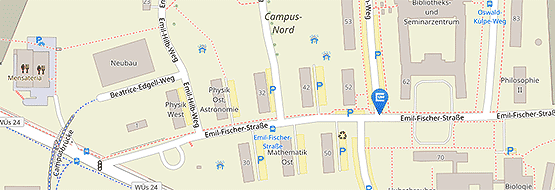
Campus Hubland Nord
Emil-Fischer-Straße 50
97074 Würzburg
Germany
Email: daniel.schloer[at]informatik.uni-wuerzburg.de
Phone: (+49 931) 31 - 84564
Office: Room 50.03.017 (Institutsgebäude Künstliche Intelligenz)
Projects and Research Interests
My research sits at the intersection of Data and Knowledge Engineering and Machine Learning, with a strong applied focus on Cyber security. I currently lead the Machine Learning for Cyber Security research group and two funded projects, DEMAnD-LM and BRACE-LLM.
My research is organized along three interconnected themes:
- Data Engineering and Knowledge Graphs: continual integration of KGs into language models (CapsKG, PreAdapter (ISWC23,24), CGKGC (ESWC26)), data pipelines for heterogeneous sources, synthetic data generation and benchmarking
- AI/ML for Cyber security: formalizing security knowledge for LLM-based agents, explainable AI, and robustness of ML-based security systems but also cyber security in a broader sense: offensive and defensive perspectives, industry collaborations in penetration testing, and practical / human-in-the-loop perspectives
- Security Analytics and Anomaly Detection: intrusion and malware detection on network flows and audit logs, red- and blue-team agents in cyber ranges for realistic data generation and evaluation
Teaching
- Summer term 26: Praktikum: Offensive Security Lab: Building and Solving CTF Challanges
- Winter term 25/26: Data Science (interim Professorship @ University of Cologne)
- Winter term 25/26: Machine Learning for Cyber Security (interim Professorship @ University of Cologne)
- Summer term 25: Seminar + Praktikum: Machine Learning for Cyber Security
- Summer term 25: Vorlesung zu Data Science (ehemals Data Mining)
- Winter term 24/25: Anomaly Detection
- Winter term 24/25: Grundlagen der Algorithmen und Datenstrukturen
- Summer term 24: Seminar + Praktikum: Machine Learning for Cyber Security
- Summer term 24: Vorlesung zu Data Science (ehemals Data Mining)
- Winter term 23/24: Vorlesung zu Machine Learning for Time Series and Anomaly Detection
- Summer term 23: Übung zu Music Information Retrieval
- Summer term 23: Seminar: Ausgewählte Themen des Machine Learning (BA and MA)
- Winter term 22/23: Seminar: Ausgewählte Themen des Machine Learning (BA and MA)
- Summer term 21: Praktikum: Musik und Maschinelles Lernen
- Winter term 20/21: Übung zu Grundlagen der Algorithmen und Datenstrukturen
- Winter term 20/21: Seminar: Musik und Maschinelles Lernen
- Winter term 19/20: Übung zu Grundlagen der Algorithmen und Datenstrukturen
- Winter term 18/19: Übung zu Grundlagen der Algorithmen und Datenstrukturen
- Winter term 17/18: Übung zu Grundlagen der Algorithmen und Datenstrukturen
- Winter term 16/17: Sprachverarbeitung und Text Mining
- Winter term 15/16: Sprachverarbeitung und Text Mining
Publications
2026[ to top ]
-
(2026) “ModeConv: A Novel Convolution for Distinguishing Anomalous and Normal Structural Behavior”, ACM Trans. Sen. Netw., available: https://doi.org/10.1145/3797951.
-
(2026) “Rethinking Synthetic Oversampling for Intrusion Detection: When Similarity Hurts Performance”, CISIS 2026 - 19th International Conference on Computational Intelligence in Security for Information Systems.
-
 (2026) “Parameter Efficient Continual Automated Knowledge Graph Completion”, ESWC 2026 - 23rd European Semantic Web Conference.
- [ BibTeX ]
-
(2026) “GE-PEFT: Gated Expandable Parameter-Efficient Fine-Tuning for Continual Learning”, Machine Learning, 115(7), 171, available: https://doi.org/10.1007/s10994-026-07104-z.
-
(2026) “Evaluating Tabular Representation Learning for Network Intrusion Detection”, IEEE CSR - IEEE International Conference on Cyber Security and Resilience.
-
(2026) “A review on robustness in Machine Learning based Network Intrusion Detection Systems”, Computer Networks, 287, 112467, available: https://doi.org/https://doi.org/10.1016/j.comnet.2026.112467.
-
(2026) “Towards Knowledge Graph-Grounded Evaluation of Agentic LLMs on Cybersecurity Capture-the-Flag Challenges”, 15th edition of the Language Resources and Evaluation Conference, KG & LLM @ LREC.
2025[ to top ]
-
(2025) “Modeling and Analyzing the Influence of Non-Item Pages on Sequential Next-Item Prediction”, ACM Trans. Recomm. Syst., available: https://doi.org/10.1145/3721298.
-
(2025) “We Need to Rethink Benchmarking in Anomaly Detection”.
2024[ to top ]
-
(2024) “ModeConv: {A} Novel Convolution for Distinguishing Anomalous and Normal Structural Behavior”, CoRR, abs/2407.00140, available: https://doi.org/10.48550/ARXIV.2407.00140.
-
(2024) “Systematic Evaluation of Synthetic Data Augmentation for Multi-class NetFlow Traffic.”, CoRR, abs/2408.16034, available: http://dblp.uni-trier.de/db/journals/corr/corr2408.html#abs-2408-16034.
-
(2024) “Benchmarking of synthetic network data: Reviewing challenges and approaches.”, Computers and Security, 145, 103993, available: http://dblp.uni-trier.de/db/journals/compsec/compsec145.html#WolfTLHS24.
-
(2024) “Digital Stylistics in Romance Studies and Beyond”.
-
(2024) “Generative Inpainting for Shapley-Value-Based Anomaly Explanation”, The World Conference on eXplainable Artificial Intelligence (xAI 2024).
-
(2024) “PreAdapter: Pre-training Language Models on Knowledge Graphs”, International Semantic Web Conference ISWC 2024, to appear.
-
(2024) “Data Generation for Explainable Occupational Fraud Detection”, 47th German Conference on Artificial Intelligence (KI 2024) - to appear.
-
(2024) “Verantwortungsvolle Empfehlungssysteme f{ü}r die medizinische Diagnostik”, Edition Moderne Postmoderne, 101.
-
(2024) “Modeling and Analyzing the Influence of Non-Item Pages on Sequential Next-Item Prediction”, available: https://arxiv.org/abs/2408.15953.
2023[ to top ]
-
(2023) “Optimizing Medical Service Request Processes through Language Modeling and Semantic Search”, in 2023 the 7th International Conference on Medical and Health Informatics (ICMHI), ICMHI 2023, Kyoto, Japan: Association for Computing Machinery, 136–141, available: https://doi.org/10.1145/3608298.3608324.
-
 (2023) “Enhancing Sequential Next-Item Prediction through Modelling Non-Item Pages”.
- [ BibTeX ]
-
(2023) “Evaluating feature relevance XAI in network intrusion detection”, The World Conference on eXplainable Artificial Intelligence (xAI 2023) - to appear.
-
(2023) “CapsKG: Enabling Continual Knowledge Integration in Language Models for Automatic Knowledge Graph Completion”, International Semantic Web Conference ISWC 2023, to appear.
-
(2023) “Occupational Fraud Detection through Agent-based Data Generation”, The 8th Workshop on MIning DAta for financial applicationS MIDAS 2023 - to appear.
-
(2023) “Liquor-HGNN: A heterogeneous graph neural network for leakage detection in water distribution networks”, LWDA’23: Lernen, Wissen, Daten, Analysen. October 09--11, 2023, Marburg, Germany.
- [ BibTeX ]
2022[ to top ]
-
(2022) “Open ERP System Data For Occupational Fraud Detection”, available: http://arxiv.org/abs/2206.04460.
-
(2022) “Towards Responsible Medical Diagnostics Recommendation Systems”, CoRR, abs/2209.03760, available: https://doi.org/10.48550/arXiv.2209.03760.
-
 (2022) Detecting Anomalies in Transaction Data, PhD dissertation, available: https://doi.org/10.25972/OPUS-29856.
- [ BibTeX ]
-
 (2022) “Towards Responsible Medical Diagnostics Recommendation Systems”, available: http://arxiv.org/abs/2209.03760.
2021[ to top ]
-
 (2021) “A financial game with opportunities for fraud”, in 2021 IEEE Conference on Games (CoG), 1–5, available: https://doi.org/10.1109/CoG52621.2021.9619070.
 -
(2021) “Malware detection on windows audit logs using LSTMs”, Computers & Security, 109, 102389, available: https://doi.org/https://doi.org/10.1016/j.cose.2021.102389.
2020[ to top ]
-
(2020) “Evaluation of Post-hoc XAI Approaches Through Synthetic Tabular Data.”, in Helic, D., Leitner, G., Stettinger, M., Felfernig, A. and Ras, Z.W., eds., ISMIS, Lecture Notes in Computer Science, Springer, 422–430, available: http://dblp.uni-trier.de/db/conf/ismis/ismis2020.html#TritscherRSHH20.
-
(2020) Financial Fraud Detection With Improved Neural Arithmetic Logic Units.
-
(2020) “iNALU: Improved Neural Arithmetic Logic Unit”, Frontiers in Artificial Intelligence, 3, 71, available: https://doi.org/10.3389/frai.2020.00071.
-
(2020) “Improving Sentiment Analysis with Biofeedback Data”, in Proceedings of LREC2020 Workshop ``People in Language, Vision and the Mind’’ (ONION2020), Marseille, France: European Language Resources Association (ELRA), 28–33, available: https://www.aclweb.org/anthology/2020.onion-1.5.
2019[ to top ]
-
(2019) “Classification of text-types in german novels”, in Digital Humanities 2019: Conference Abstracts, available: https://doi.org/https://doi.org/10.34894/OMLKRN.
-
(2019) “Flow-based network traffic generation using Generative Adversarial Networks.”, Comput. Secur., 82, 156–172, available: http://dblp.uni-trier.de/db/journals/compsec/compsec82.html#RingSLH19.
2018[ to top ]
-
(2018) “Burrows’ Zeta: Exploring and Evaluating Variants and Parameters”, in DH, 274–277, available: http://dblp.uni-trier.de/db/conf/dihu/dh2018.html#SchochSZG0H18.
-
(2018) “A White-Box Model for Detecting Author Nationality by Linguistic Differences in Spanish Novels”, in DH, ADHO.
2017[ to top ]
-
(2017) “Neutralising the Authorial Signal in Delta by Penalization: Stylometric Clustering of Genre in Spanish Novels.”, in Lewis, R., Raynor, C., Forest, D., Sinatra, M. and Sinclair, S., eds., DH, Alliance of Digital Humanities Organizations (ADHO), available: http://dblp.uni-trier.de/db/conf/dihu/dh2017.html#TelloSHS17.
2016[ to top ]
-
(2016) “Extracting Semantics from Unconstrained Navigation on Wikipedia”, KI -- Künstliche Intelligenz, 30(2), 163–168.
-
(2016) “Straight Talk! Automatic Recognition of Direct Speech in Nineteenth-Century French Novels.”, in DH, 346–353.