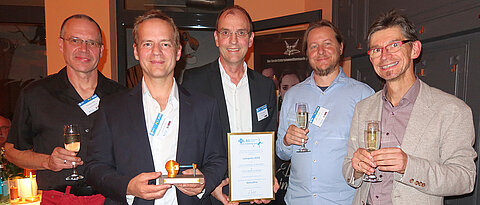
For the development of the virtual laser laboratory simulator ‘femtoPro’, three Würzburg researchers have been awarded the 2026 Teaching Prize by the German Physical Society.
more
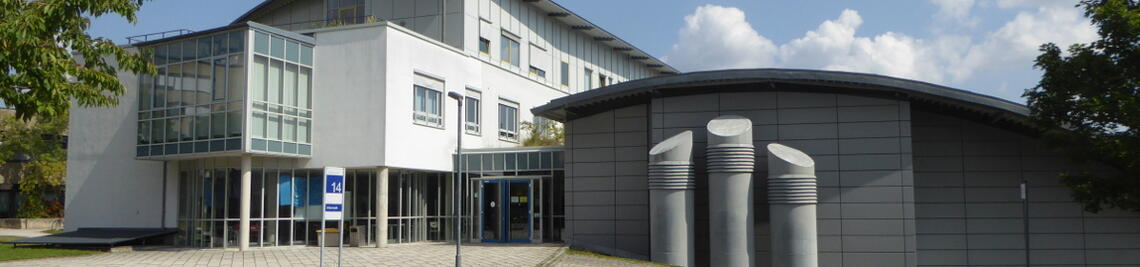
For the development of the virtual laser laboratory simulator ‘femtoPro’, three Würzburg researchers have been awarded the 2026 Teaching Prize by the German Physical Society.
more
We are happy to announce that the paper "Gradient Iterated Temporal-Difference Learning" by Théo Vincent, Kevin Gerhardt, Yogesh Tripathi, Habib Maraqten, Adam White, Martha White, Jan Peters, and Carlo D'Eramo has received the Outstanding Paper Award on Empirical Reinforcement Learning Research at the Reinforcement Learning Conference (RLC) 2026 in Montreal, Canada.
more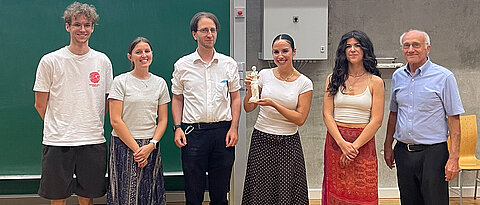
How can Germany become more digitally sovereign? At the end of the semester, nearly 40 students from various Master’s programmes presented the results of their innovative projects from the ‘Projektiade 2026’ start-up competition.
more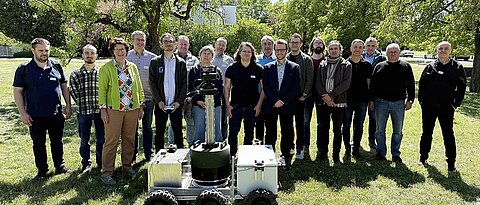
On 29 April 2026, the digitalPV innovation network held its latest in-person networking meeting at the Chair of Robotics. Partners from industry and research gathered to exchange knowledge and discuss the latest developments in the digitalization of photovoltaic power plant inspection and operation.
more
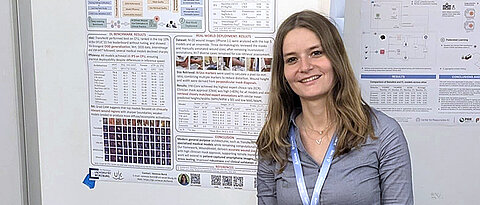
Würzburg computer scientist Vanessa Borst received an award at an international conference - for co-developing a dermatological app for the University Hospital of Würzburg.
more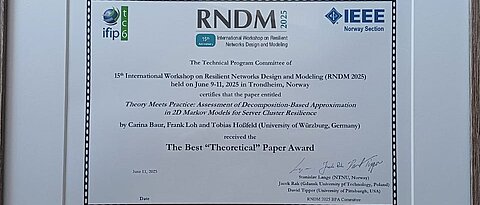
The paper "Theory Meets Practice: Assessment of Decomposition-Based Approximation in 2D Markov Models for Server Cluster Resilience" by Carina Baur, Frank Loh, and Tobias Hoßfeld from the Chair of Communication Networks received the Best Paper Award at the 15th International Workshop on Resilient Networks Design and Modeling.
more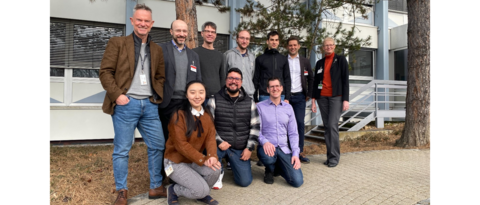
On March 3, 2023, IBM and the Chair of Software Engineering of the University of Würzburg celebrated the kick-off of their one-and-a-half-year research project on the topic of energy efficiency.
more